

 A+ Member


- Supports USB 3.2 Gen2 high-speed transmission
- Transfer speed up to 550MB/s
- 1.22m MIL-STD drop shock resistance
- Support for latest generation games
- Supports multiple operating systems and computer platforms
Data Transfer in Seconds
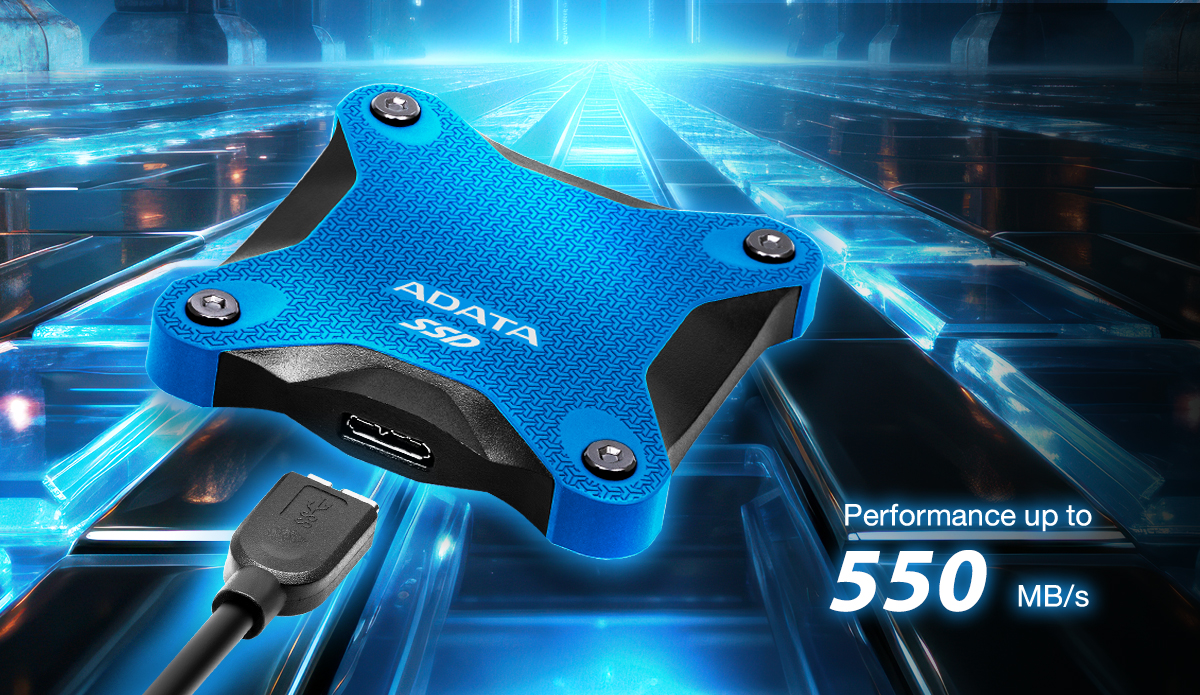
Loved it from the start! With a transfer speed of up to 550MB/s, the SD620 is a racehorse of digitally transmission, only taking about 20 seconds to complete transfer of a 10GB 4K high-definition video file. Backing up your data will no longer be a chore!
MIL-STD Shock Resistance Handles Unexpected Bumps
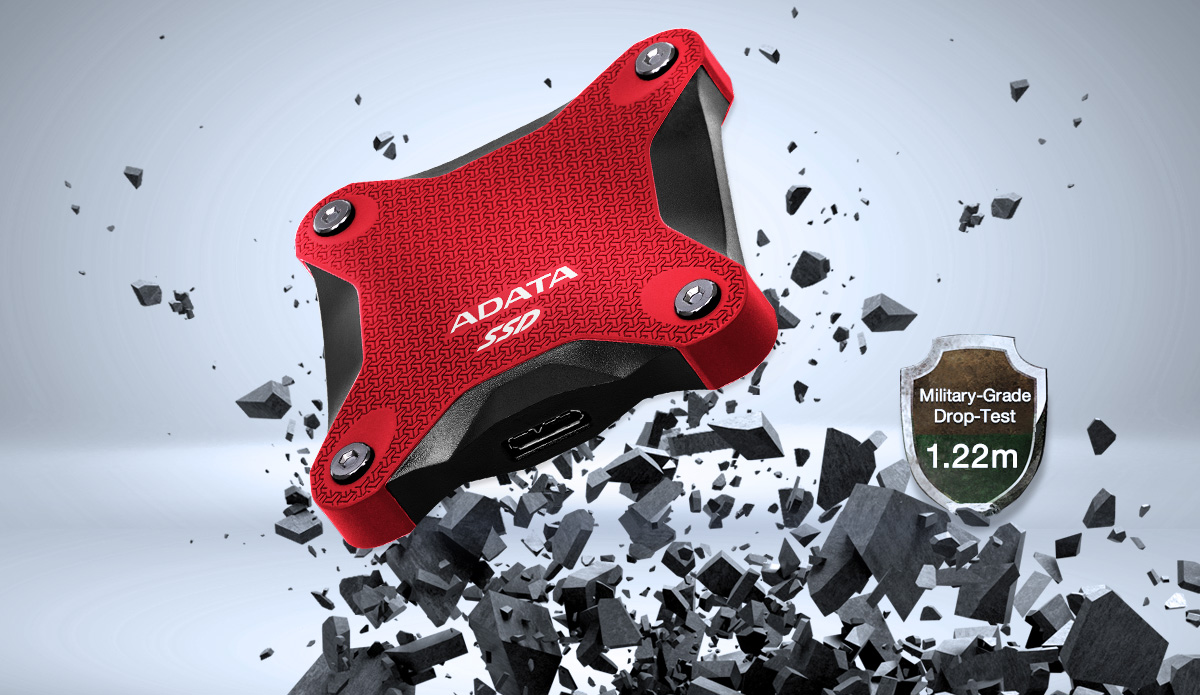
The SD620 is covered in a protective anti-shock silicone sheath which is a superior elastic buffer when compared to standard external SSDs. It has passed strict MIL-STD-810G 516.6 drop testing and will remain unscathed even if dropped from 1.22 meters. The SD620's durability makes carrying it a no-brainer!
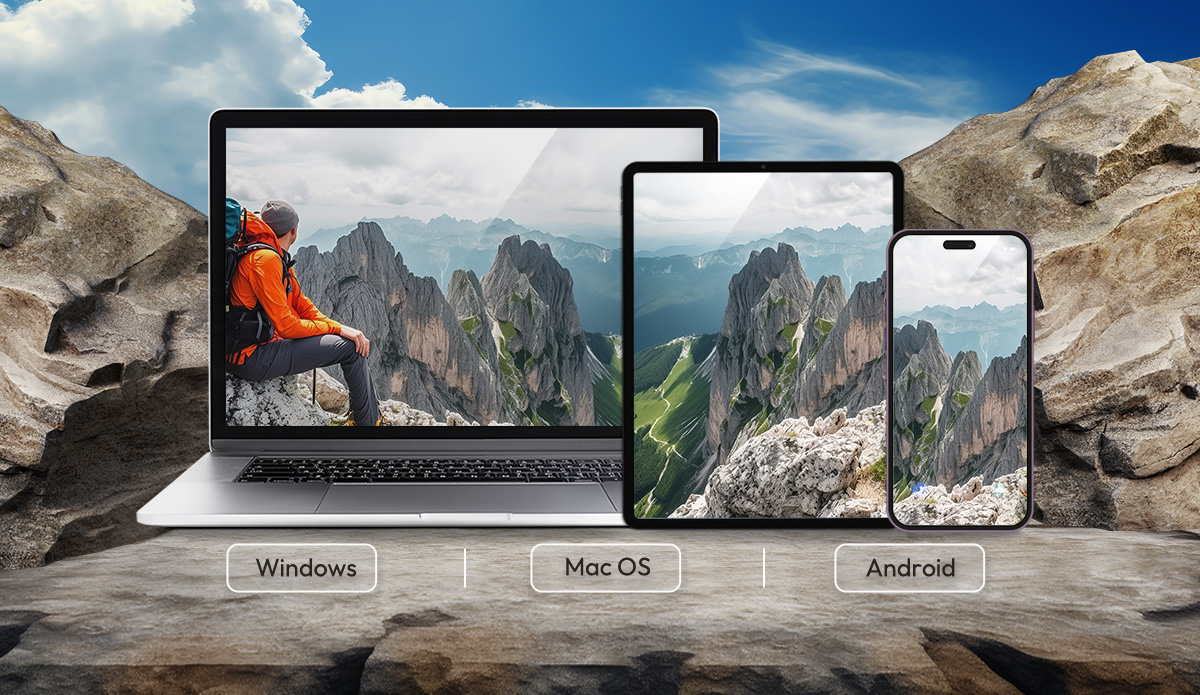
Multi-platform and Cross-device
The SD620 is compatible with operating systems such as Android, Mac OS, and Windows, and supports hot-swapping. It can be connected to various devices such as PCs, tablets, mobile phones, and game consoles. The SD620 can transfer files without installing additional drivers. Backing up all your devices in one go is both convenient and secure!
*The software and hardware of mobile devices must support external solid-state hard drives to enjoy OTG data backup and transmission functions.
** Supported platforms: Please click here to learn more.
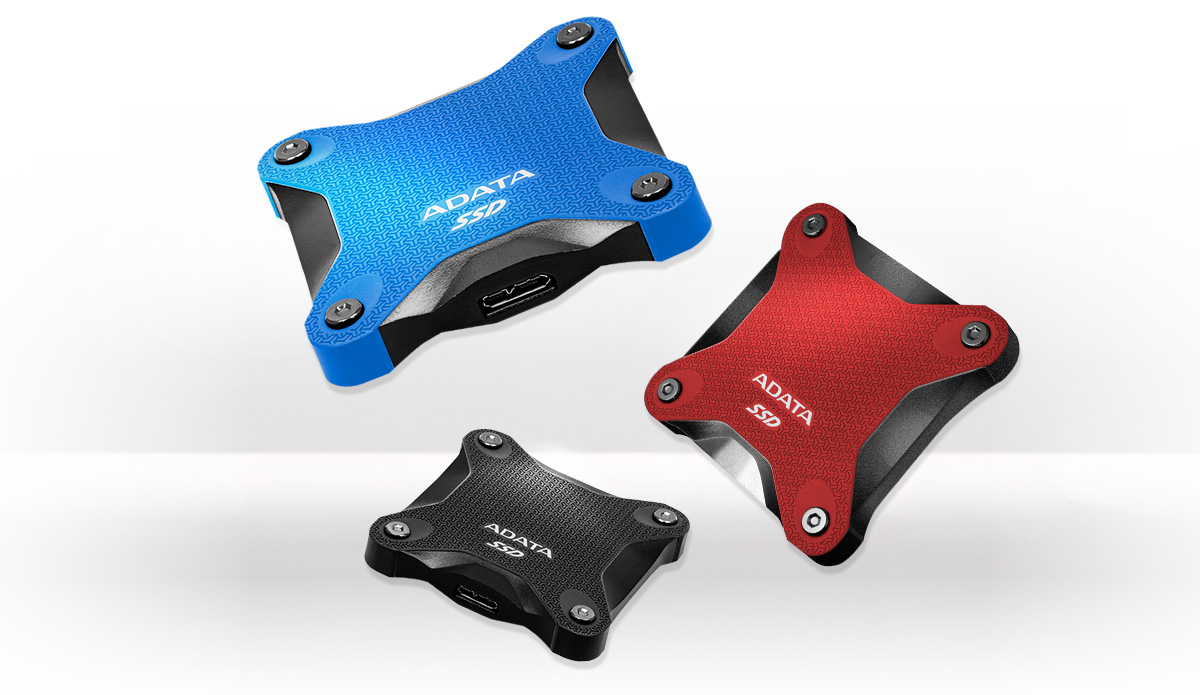
Enjoy Three Classic Colors
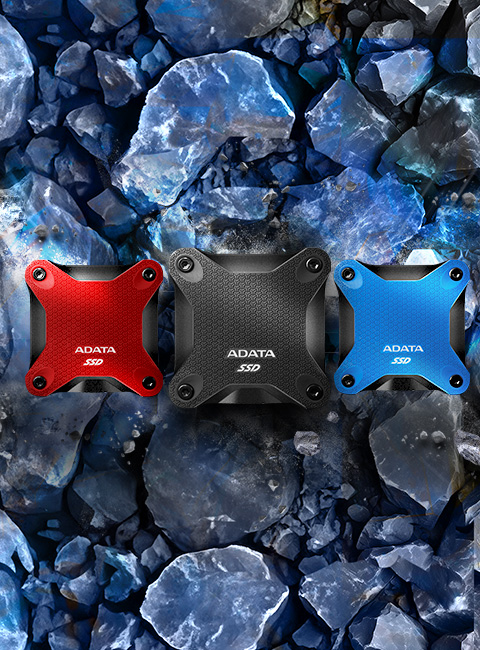
The SD620 is available in three classic colors including black, blue, and red, to fit your personal style and self-expression. It is also a statement of confidence, allowing you to exhibit your unique fashion sense through this storage device.
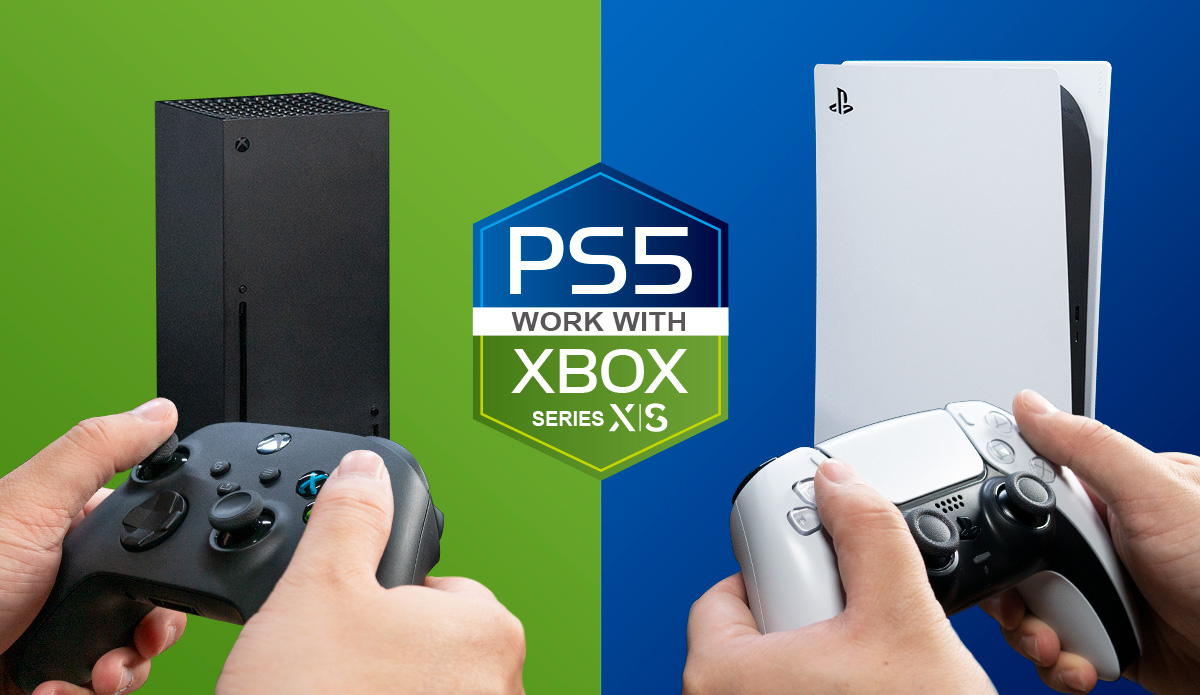
Your Game Library
Supporting many of the latest game consoles, the SD620 is ideal for storing all your games without out taking up too much physical space.
*Formatting may be required before connecting to your game console. For more information, click here.
| Color | Black / Blue / Red |
|---|---|
| Capacity | 512GB / 1TB / 2TB |
| Weight | 54.9g / 1.94oz |
| Interface | USB 3.2 Gen 2 (10Gbps) (backward compatible with USB 2.0) |
| Sequential Read (Max*) | Up to 550MB/s |
| Sequential Write (Max) | Up to 480MB/s |
| Operating system requirements | Windows 8 / 8.1 / 10 / 11 Mac OS X 10.6 or later Linux Kernel 2.6 or later Android 8.0 or later |
| Op. Temperature | 5–50°C/41–122°F |
| Op. Voltage | DC 5V, 900mA |
| Accessories | USB 3.2 cable, Quick start guide |
| Dimensions ( L x W x H ) | 80 x 80 x 15.2 mm / 3.15 x 3.15 x 0.6 inch |
| Warranty | 3-year limited warranty |
| Remark |
|
- A: Please click here for more information.
- A: In Windows XP, you can partition disks through Control Panel / administrative tools / computer management / disk management. Select the installed hard disk, and press the right mouse button, and select the option to partition the drive.
- A:
New external SSDs need to be formatted in order for the system to read and write data. The NTFS file system is recommended for Windows system. However, the EXFAT file system is recommended for SE880 external SSD.
- A: There may be compatibility issues with certain security programs for mobile devices that are completely unrelated to the external SSD. Most Android device manufacturers themselves do not guarantee compatibility with such apps. If the OS of your mobile device freezes, reboot the mobile device. If this fails, please contact the device manufacturer.
- A: While most USB devices such as external hard drives, external SSDs, and Flash drives can be plugged and unplugged at will, do avoid doing so when they are active. If you unplug a storage device or a removable drive from your computer while it’s transferring or saving information, you risk data loss or corruption. If in doubt, use the Windows “Safely Remove Hardware” feature, which stops drive operations and then ends the connection between it and the host computer safely.
- A: Make sure the external SSD is securely connected to a USB port. Detection failure may be related to a faulty USB port. If possible, try connecting the external SSD to another USB port. If detection issues persist, please contact ADATA customer service.
- A: 1. Connect the drive to your Windows PC
2. Open the Disk Management tool. You can do that by typing "disk format" or "disk management" in Windows search or going to Control Panel > Administrative Tools > Create and format hard disk partitions
3. Right-click on the external drive partition or the unallocated space you want to format and choose New Simple Volume
4. Follow instructions to choose a volume size
5. Assign a drive letter
6. Choose the file system in the Format Partition screen
7. Give the volume a new name
8. Click Next
9. Click Finish
10. Formatting complete - A: Please click here for more information.
Download here: https://www.adata.com/us/support/downloads/
Read Manuel: https://webapi3.adata.com/storage/support/software_backuptogo/en/backup_togo_manual_en.html
Demonstration Video: https://www.youtube.com/watch?v=CzkjFJzu7nA - A: If data transfer is interrupted, make sure that the error was not caused by a lack of power. If a transmission interruption occurs, please reconnect the device and retry the data transmission. In theory, data will not disappear because of interruptions in the transfer process.
- A: If the external SSD loses power or is unplugged in an unsecure manner, Windows may prevent files from being copied to it. This is a Windows protective measure associated with the file system and does not mean the external SSD has a technical issue. You can try resolving this using the following steps:
- Click the “Scan and Fix” notification that appears when you connect the external SSD to your PC
- If you closed the notification, right-click on the external SSD icon in the system tray (notification area) and use the “Run CHKDSK” command
- If the external SSD icon isn’t displayed in the system tray, open Explorer and select the external SSD, then right-click, Properties, Tools, Check - A: We recommend that you use the Safely Remove Device function before disconnecting the cable between the external SSD and your Android device. Failing to do this may cause copied files to become corrupted and unreadable.
- A: Most new TVs support photo, music, and video playback from external storage via USB. However, not all TVs support this function and file system compatibility may vary. When connecting the external SSD to a TV, please check the following:
- After connecting the external SSD to the TV USB port, check if the external SSD is recognized in the TV menu
- If it isn’t recognized, please refer to the TV user manual or contact the manufacturer to check for USB support
- If it is recognized, check that you can play videos and music and view photos stored on the external SSD without any issues
- In case content can’t be accessed, verify which file systems are supported by your TV for external storage. The external SSD is formatted using the NTFS file system by default
- Follow any prompts from your TV operating system relating to the external SSD formatting. Modern TVs will auto-format external storage to a supported file system
■Important: formatting will delete all data. Please backup your data before proceeding If the file system is supported but you still can’t access content, verify the file types and extensions supported by the TV. - A: The external hard drive requires a start-up current of over 600 milliamps, however USB 2.0 can only provide a maximum of 500 milliamps. As a result, it is recommended that you use a Y-cable we using with a USB 2.0 host devices.
- A: The actual drive capacity displayed on your device will vary from external SSD physical capacity due to mandatory operating system formatting and partitioning. Typically, operating systems remove 10-20% of drive physical capacity. This means a 250GB external SSD will have around 232GB free once it is fully formatted and detected by a supported operating system
- A: Differences in size shown are mainly due to differences in computer operating systems, the calculation method for an external hard drive capacity, and the Controller IC’s operations result in different ways. Generally, hard disk manufacturers usually calculate capacity based on the decimal system, and computer systems are actually binary. Hard drive manufacturer: 1KB = 1000 Bytes, 1MB = 1000KB, 1GB = 1000MB, 1TB = 1000GB
Operating system: 1KB = 1024 Bytes, 1MB = 1024KB, 1GB = 1024MB, 1TB = 1024GB
So for example, a hard disk marked as 500GB capacity is 500GB = 500 x 1,000MB x 1,000KB x 1,000Bytes = 500,000,000,000 Bytes, but in binary the capacity is calculated as 500,000,000,000 Bytes / 1024KB / 1024MB / 1024GB, approximately 465GB.
Fastest method of calculation: the hard disk capacity x 0.93 = the approximate actual hard disk capacity - A: UASP stands for USB Attached SCSI Protocol. It combines SCSI commands and USB standards to accelerate data movement and make file transfers more efficient. If your device does not support UASP, you may update it from the device manufacturer website, as UASP functionality can be added via firmware or operating system update.
- A: Solid State Drives (SSD) are storage devices like hard drives, but with much better performance, especially as regards random access speeds. But because of their higher price, they are often more suitable to be used as the drive from which the operating system is run. The slower speeds of HDDs mean they are likely to be used as data backup media, and for data archives.