


 A+ Member


- Read/write speeds up to 180/160MB per second
- Support U3, V30 video specifications
- Complies with A2 standards, able to carry out a large number of commands
- Large storage capacity
- Efficient, durable, and reliable data protection
SPEED PLUS Storage Evolved
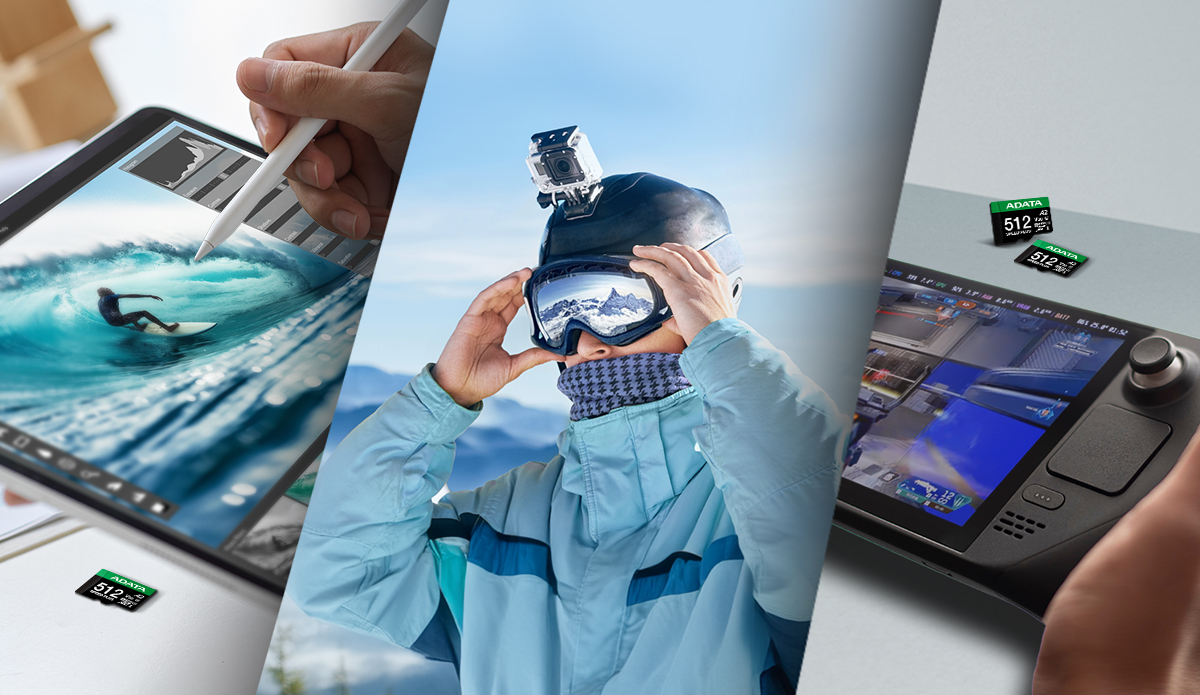
SPEED PLUS microSDXC memory cards can be used in a variety of devices such as drones, action cameras, 360-degree photography, head-mounted devices, etc. Maximum transfer speed can reach 180MB per second*, with excellent read/write performance and capacity. This card is the perfect assistant for adventurers who want to capture every moment.
*A dedicated card reader is required to achieve speeds exceeding UHS-I 104 MB/s. Data listed are internal test values and will vary depending on the consumer's system, hardware conditions, and other factors. Please see the compatibility list for recommended card reader models.
Load Seamlessly with A2 Standard
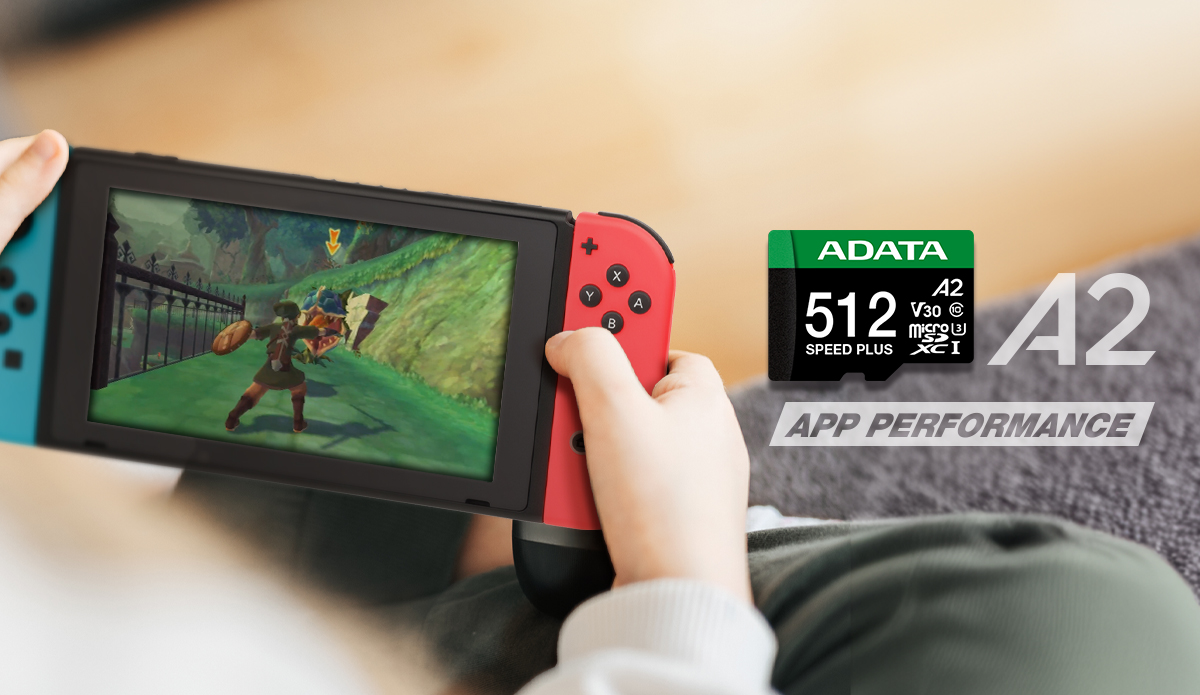
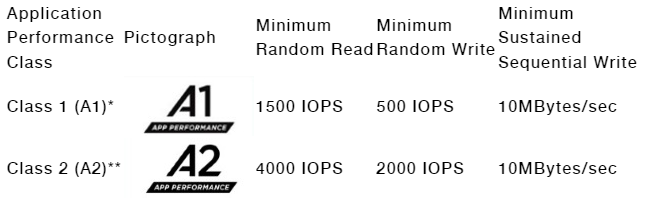
As mobile device performance continues to increase by leaps and bounds, the SD Association has released a new A2 standard (Application Performance Class 2), allowing SPEED PLUS microSDXC memory cards to provide a minimum random read speed of 4,000 IOPS and a minimum random write speed of 2,000 IOPS. This standard also optimizes the access and loading time of system applications, handles multiple simultaneous commands, and saves power.

Ultra-clear Dynamic Recording with No Frame Drops
The SPEED PLUS microSDXC memory card adopts UHS-I U3 high-speed specifications and V30 recording speed levels, supports high-definition motion image processing such as Full HD, 3D surround view, and 4K Ultra HD, and can maintain a minimum write speed of 10MB per second in a stable manner, faithfully recording every wonderful moment and making professionals more professional.
Durable and Reliable Data Protection
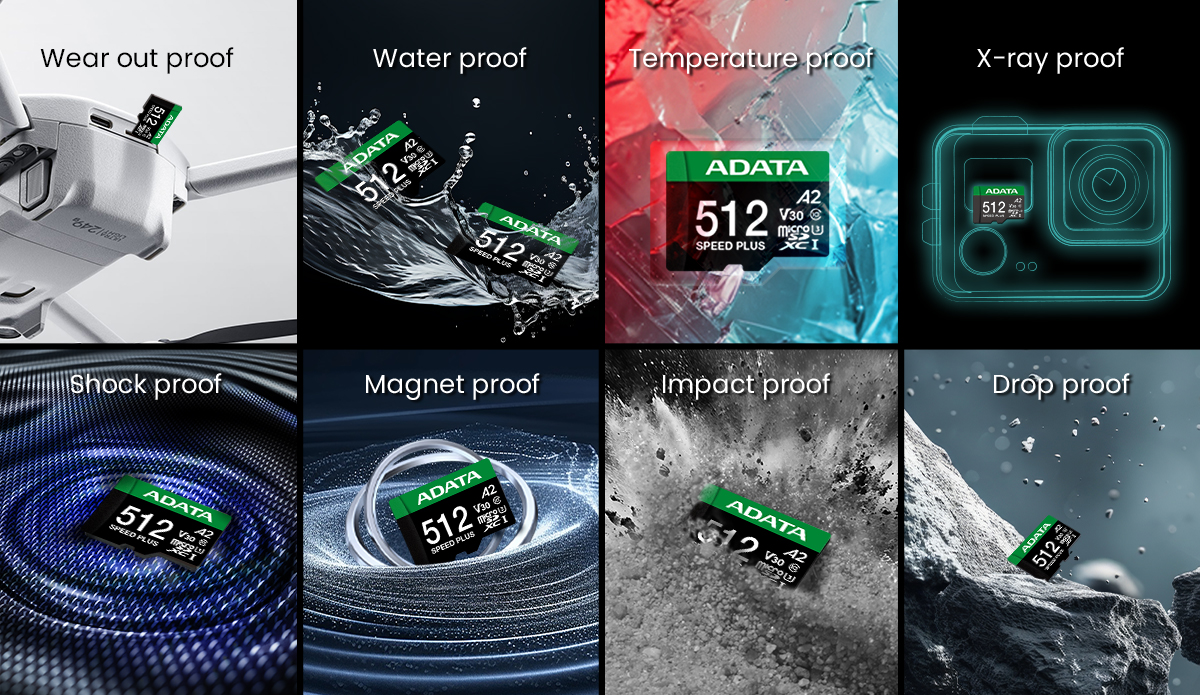
The SPEED PLUS microSDXC memory card features an SSD-level LDPC (Low-density parity-check code) automatic error correction function and has passed water resistance, shock resistance, X-ray resistance, anti-static, and high temperature and extreme cold resistance tests to offer the best protection for important data.
| Capacity | 64GB / 128GB / 256GB/ 512GB |
|---|---|
| Standard | SD6.0 |
| Speed Class | UHS Speed: Class 3 Speed Class: Class 10 Video Speed Class: V30 Application Performance Class : A2 |
| Working Voltage | 2.7V - 3.6V |
| R/W Performance | Up to 180/160MB/s*(512GB/256GB/128GB) Up to 160/140MB/s* (64GB) |
| Operating Temperature | 0°C to 70°C |
| Dimensions ( L x W x H ) | 15 x 11 x 1 mm |
| Weight | 0.25 g |
| Compatibility | Laptop/Desktop with card reader / Tablet / Action camera / Panoramic camera / Drone / Handhelds |
| Certifications | CE, FCC, VCCI, EAC, RCM, UKCA, IC |
| Warranty | Lifetime |
| Remark | *A dedicated card reader is required to achieve speeds exceeding UHS-I 104 MB/s. Data listed are internal test values and will vary depending on the consumer's system, hardware conditions, and other factors. **Please make sure your device supports the SD 6.0 specification or later to achieve the best A2 level performance. |
- A:
Please find the table below for detailed information.
- A:
The SD Association has defined various Speed Class standards to answer a demand for advanced video quality recording. Speed Class symbols indicated to host and card products help users decide the best combination for reliable recording (no frame drop). Before use, we recommend checking whether the card’s speed class meets your device’s specifications for optimal performance.

- A: There are lots of reasons that cause memory cards to fail to be recognized. Such as: a. Power has been off during data transfer. b. Memory card was removed during data transfer. c. Taking photos when the battery status is low. d. Memory cards go through X-ray machine. e. Memory cards are close to strong magnetic devices. If your memory card is unable to be read yet meet none of the above situations, please contact us via https://www.adata.com/en/contact or visit our customer service site for further help.
- A: Memory cards cover a wide range of devices when it comes to data storage, including dash cam, action cameras, laptop/PCs, game consoles, smartphones, etc.
- A: The differences in the display of capacity are due to differences in calculation between the computer operating system and the storage device's Controller IC. The storage device usually calculates in the decimal system, while the computer operating system calculates on the basis of the binary system. The calculation of the storage device: 1TB=1000GB, 1GB=1000MB, 1MB=1000KB, 1KB=1000Bytes. The calculation of the operating system: 1TB=1024GB, 1GB=1024MB, 1MB=1024KB, 1KB=1024Bytes. For example, a storage device marked with having 128GB capacity, 128GB=128*1,000*1,000*1,000=128,000,000,000Byte. But, the computing unit of the computer calculation is a binary system, so the 128GB calculated by the storage device is converted into bytes, 128,000,000,000Bytes, so what will be displayed through computer’s calculation method is 128,000,000,000/1024/1024/1024≒119GB. The fastest way to calculate: The capacity labeled on the product x 0.93is about equal to the actual capacity recognized in the computer. Please note that actual capacity may vary depending on OS or host device.
- A: This could happen because 1) Write protection switch is locked. 2) Too many bad data block resulting in memory cards locked by firmware. If your memory card is unable to delete files or format and meet none of the above situations, please contact us via https://www.adata.com/en/contact or visit our customer service site for further help.
- A: Currently the general public uses Smartphones and Tablets with many small software applications and game-based programs. Higher IOPS means the device can more quickly read and write the many small files used by these programs, resulting in more speed and better natural support.
- A: IOPS stands for Inputs/Outputs Per Second. It is a common benchmark used to measure performance of storage devices. For example, A2 SD/microSD cards should reach a 4K random read speed of 4000 IOPS, meaning at least 4000 instances of 4KB read/write commands can be executed per second, or 15.625MB/s as data transferring speed.